The Telemedicine initiative
Most pathogens can be killed readily in air but more slowly on surfaces. The rate of kill varies with the pathogen. Viruses will succumb quickly, Mycobacteria such as TB take much longer, but will eventually be destroyed. Hydroxyl radicals are not selective, but most beneficial bacteria are immune to hydroxyl radicals.
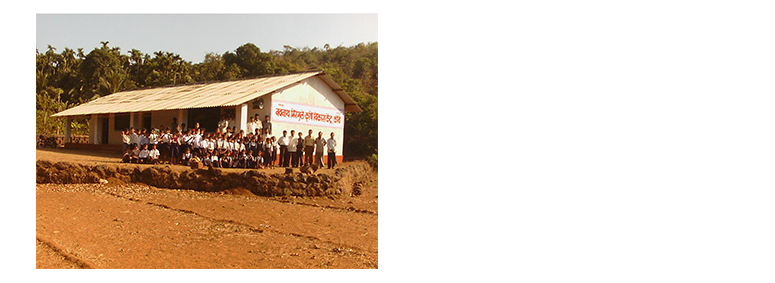
Schools in Rajapur Taluka
Accommodations for HIV positive and AIDS affected families
India has an estimated 2.5 million people living with HIV especially concentrated in the states of Andhra Pradesh, Tamil Nadu, Maharashtra, Manipur, Nagaland and Karnataka. The causes are many and often overlap with each other; the main modes of transmission are known to be through sex work, migrant workers, truck drivers, injecting drug use, same sex intercourse. Prevention is complicated particularly in rural areas where the level of education is extremely low.
(source and for more information: www.unaids.org )
Women are likely to contract the virus from their husbands and to pass it onto their children. Usually if the man dies first, the wife is considered responsible for the transmission of the disease and is thrown out of the house with her children, with no where to go. The stigma against infected people is very strong, there is a high number of people that would not undertake tests or speak about their disease out of fear of being excluded from the community. The Konkan coast has a rising number of HVI positive and AIDS infected people. Interlock has decided to build accommodation for those families who do not have a place to stay and for the children that are orphans. To give an idea of theextent of the problem, there are an estimated 25 million orphans in India as the result of AIDS. (source: www.aidsalliance.org )
In Shanti Van foundations have been laid for accommodations for children and their mums, construction of the houses will start as soon as the dry season starts. Our aim is to keep families together as long as their heath allows it and we want to relieve mothers from the terrible worry of not knowing what will be of their child should they pass away. Interlock will offer food, education and health care including access to anti-retroviral drugs. We will also offer mothers an occupation in the complex at Shanti Van, in an effort to fight the stigma and to give them back their dignity. Financial support will be provided from the income generated from the ethical tourism program, i.e. the guest house /hotel.
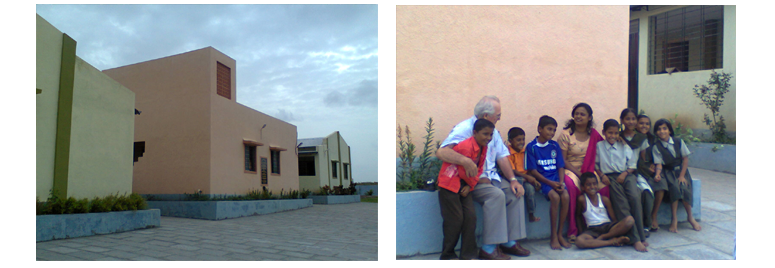
Mr McKee with some children victims of HIV/Aids at the new Social Science Centre Ahmednagar
Shanti Van Catering College
In conjunction with the building of a guest house / hotel Interlock will be providing a catering college to offer hospitality training to the young men and young ladies of the area.
Tourism in India is an ever growing industry, along with foreigners domestic tourists are also increasing thanks to improved transportations and raising income. The Konkan coast is rather unexploited but the construction (soon to start) of a new coastal highway from Mumbai to Goa is expected to boost the number of tourists in the area, especially Indians.
We want to give the locals a chance to benefit from this growth and we would like them to have the necessary skills to be employed in the hotels and guest houses that have been built and proposed. Some of the students will come from villages that already have guest facilities funded by Interlock, and they will learn how to improve and run the guest houses. The income will support the village development and child care programme, as part of Interlock Ethical tourism project .
This project requires volunteers , we welcome applications!
Shanti Van
Solar Power
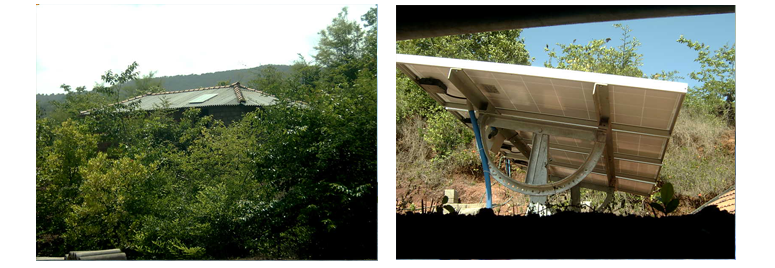
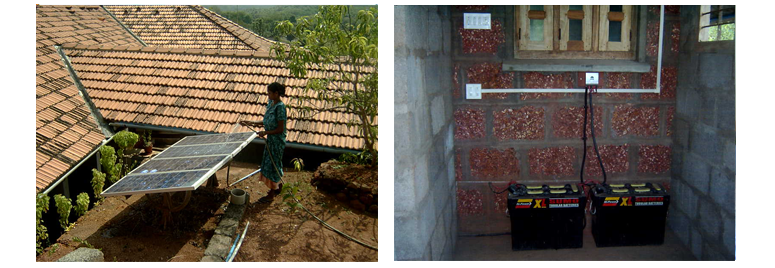
There are sufficient solar panels now installed at Shanti Van, making it possible for the site to rely solely on solar energy. The Interlock HQ and the guest houses’ electrical appliances have been powered by the solar panels since late 2007. We have batteries to store spare solar powerand use it when there is no direct sunlight available, and we also have an electricity generator to ensure supply in case of need. Panels and batteries were installed on the clinic and the office, ready for use when the buildings will start operating (see Shanti Van project for more info). Not only are we helping the environment and saving money on electricity but most of all we are showing that it is possible to implement renewable energy technologies in remote areas. Our work is an example for those that think that solar power is a complex technology available only in urban areas.
Solar demonstration / alternative energy project - We are discussing with teachers of local schools about organising school visits toShanti Van for the students to see how solar power works. Those students could be the future solar power engineers to work in Interlock Shanti Van and other projects!
Interlock is presently working on a system to use affordable solar power to pump water for the villages of the Konkan area. We would like to hear from professionals that could help us expanding our solar / wind power projects and help to establish the demonstration unit
Solar Water
Floating Clinic
Floating Clinic for inland waterways. New project requires volunteers.
Migrant Children Program
The program started as a result of Interlock's support for victims of the Tsunami and is run together with RDT (Rural DevelopmentTrust), a local organisation that Interlock helped set up. The program focuses on providing education for the children of migrant workers and nomadic tribes that moves to and from Andhra Pradesh and Tamil Nadu. The tribes’ only source of income has been cleaning fishnets for generations and they used to move from village to village following the fishing season until the Tsunami disrupted their way of living in December 2004. The villages where the tribe used to work were destroyed and today these people are struggling to find new means of subsistence.
To ensure that the children can access basic educationand break the poverty cycle, Interlock and RDT have built six Day Care Centres in Tamil Nadu which offer one meal per day to each student. The children can attend school in each centre with minimal disruption in their classes. As the two states not only speak different languagesbut also use a different script, the teachers are teaching Tamil, Urdu and Telugu. This will allow these children to integrate better in both states and have better work opportunities in the future. The Tamil Nadu Child Development Department funds one meal per day per child and the wageof a helper for each centre.
RDT has alsodeepened 30 wells in villages that were in need of a better irrigation to improve crop production.
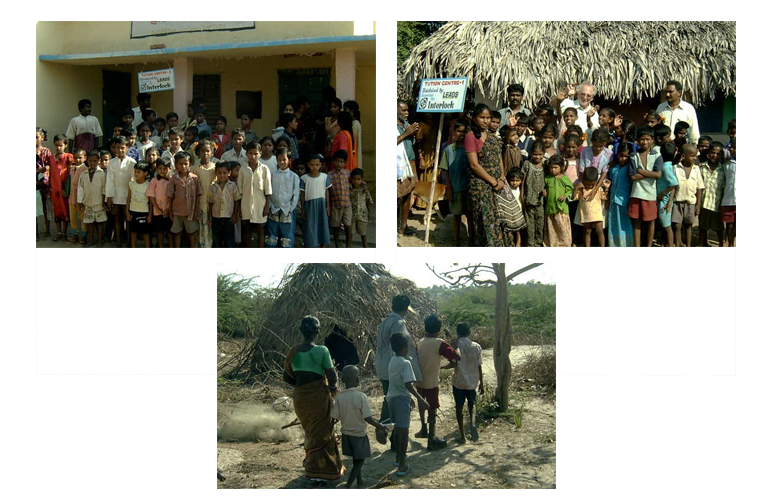
The photos below show our first classroom before opening the Day Care Centres, and the children in our centres. More photos can be found in the photo gallery .
Child Labour Program
The Child labour Program is part of our work in the state Andhra Pradesh and was set up as a result of Interlock's support for victims of the Tsunami. A high number of people lost their jobs because of the Tsunami and a high number of children started to work to contribute to the family income. Interlock is helping these families and sending the children back to school. Together with our partner LEADS (Legal Education and Action in Development of Society), we have leased a property for a children’s hostel and recruited teachers and helpers. The hostel and its school are attended by a high number of children, the number has increased from 90 to 182 in the last year. Here they are given two meals per day and stationary for their classes.
The hostel has recently been redecorated and a new kitchen been built.
Even if families lose an income when children are removed from working, the meals offered at the hostel relieve them from aburden that they would not be able to afford and decreases the chances of school drop-out. For those children that do not have traceable family members, the hostel represents a home and an alternative to begging and rough sleeping.
Interlock believes in the principle that ‘no-one is turned away’ and has expanded the ‘one meal a day’ scheme to widows and widowers who struggle financially. These people are among the most vulnerable social categories in India and rarely receive support.
The photos below show the children at the hostel, the ceremony for the newly decorated hostel and the widows and widowers having a meal at our centre.
Widows Global
Local Partner:
Each Community project has a ladies group that will identify widows and widowers in the village and some that have migrated to the city slums with dependant children and by interlocking them with widows/widowers internationally will assist them to remain in the village or return from the slums. Thereby reversing the migration.
Local Contact:
Ladies working groups
Status Report:
Under Development – Project still at discussion level
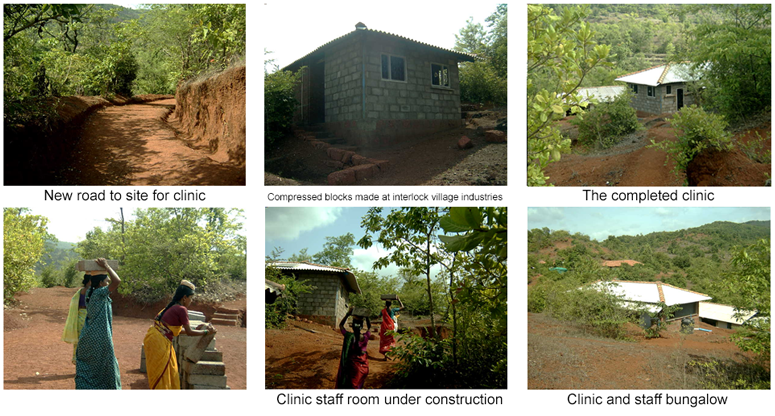
Clinic at Interlock Shanti Van
Local Partner:
Vatsaliya Mandir
Shanti Van Fish Farm
Shanti Van Fish Farm Community Project:
Fish Farm.
Local Partner:
Shanti Van
Local Contact:
Director of Shanti Van
Oni Boys Hostel
Kondwadi Water
Kondwadi Community Project:
Kondwadi Water Resources and Village Well
Local Partner:
Village committee
Local Contact:
President of Ladies Working group.
Kondwadi Standpipe
Kondwadi Community Project:
Main Water Supply and Standpipes into Village.
Local Partner:
Jagruti Mahila Mandal (Ladies Awakening Club)
Local Contact:
Mrs Suttar
Kondwadi
Kondwadi Community Project:
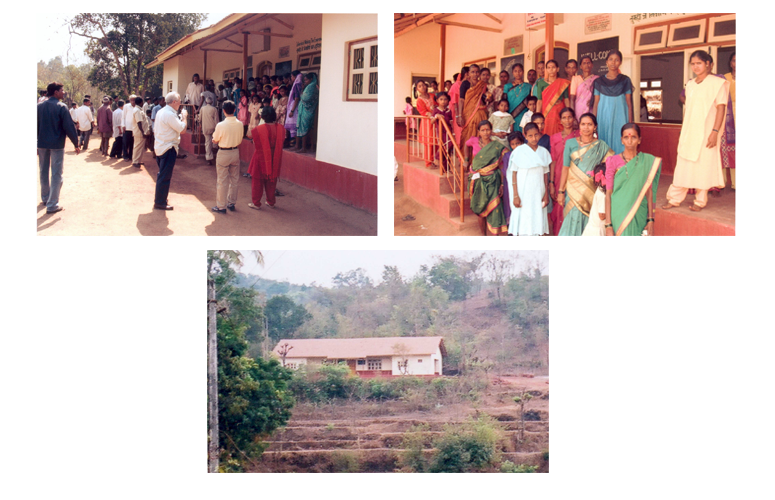
Kondwadi Community Hall and Guest Rooms
Local Partner:
Jagruti Mahila Mandal - Ladies Club Society
Local Contact:
Mrs Suttar
Status Report:
100% Complete. Formally opened in the presence of Interlock representatives on 3 March 2004
Kombe Agricultural
Kombe Agricultural Extension Programme
Kombe Agricultural Extension Programme
Local Partner:
Kombe Farmers Cooperative
Local Contact:
Mr Mirgule
Kombe
Kombe Agricultural Extension Programme
Kombe Community Hall and Guest Rooms
Local Partner:
Kombe Farmers Cooperation
Local Contact:
Mr Mirgule
Status Report: 100% Complete - Ready for paying guests.
project-kondwadi